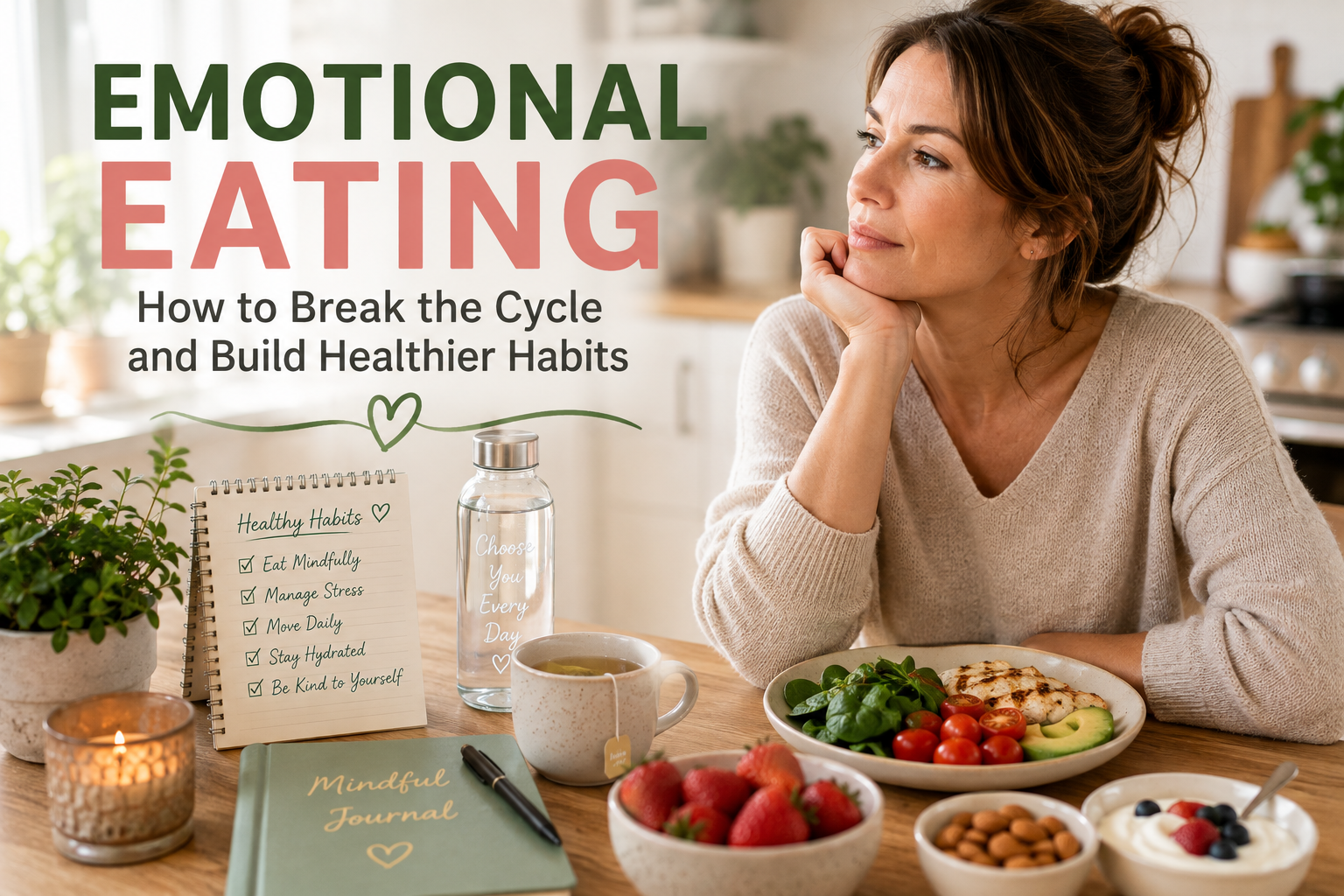
Emotional Eating: How to Break the Cycle and Build Healthier Habits
Have you ever reached for a bag of chips after a stressful day or craved chocolate when you were feeling overwhelmed? If so, you’re not alone. Emotional eating is a common habit that affects many people and can make weight loss feel frustrating, even when you know what healthy eating looks like.
The good news is that emotional eating isn’t about a lack of willpower. By understanding your triggers and learning healthier coping strategies, you can break the cycle and build lasting habits that support both your physical and emotional well-being.
- Walking for Weight Loss: A Simple Way to Burn Fat
- Sustainable Weight Loss That Actually Lasts
- Healthy Soups – Easy Recipes for Every Season
- Cardio vs Strength Training: Which Is Better?
- Healthy Egg Muffins for an Easy High Protein Breakfast
What Is Emotional Eating?
Emotional eating is eating in response to feelings rather than physical hunger.
Instead of eating because your body needs energy, you eat to cope with emotions such as:
- Stress
- Anxiety
- Boredom
- Loneliness
- Frustration
- Sadness
- Happiness
- Celebration
Food can temporarily provide comfort or distraction, but it usually doesn’t solve the underlying problem.
A mindfulness journal can help you identify emotional eating triggers, track your mood, and build healthier daily habits.
Emotional Hunger vs Physical Hunger
Learning to recognize the difference between emotional and physical hunger is one of the most powerful tools for changing your eating habits.
Physical Hunger
- Develops gradually
- Can wait a little while
- Any nutritious food sounds appealing
- Stops when you’re comfortably full
- Doesn’t leave you feeling guilty afterward
Emotional Hunger
- Appears suddenly
- Often craves specific comfort foods
- Feels urgent
- Continues even after you’re physically full
- May lead to guilt or regret afterward
Simply pausing to ask yourself, „Am I physically hungry or emotionally hungry?“ can help you make a more mindful decision.
Common Emotional Eating Triggers
Everyone has different triggers, but some situations are especially common.
Stress
When you’re stressed, your body releases hormones that can increase cravings for high-fat and high-sugar foods.
Boredom
Sometimes eating becomes a way to fill empty time rather than satisfy hunger.
Fatigue
Lack of sleep often increases hunger hormones and reduces self-control, making comfort foods even more tempting.
Difficult Emotions
Sadness, anxiety, disappointment, and loneliness can all increase the desire to eat for comfort.
Habits
Many people automatically snack while watching television, scrolling on their phone, or working at the computer without realizing it.
Practical Strategies to Stop Emotional Eating
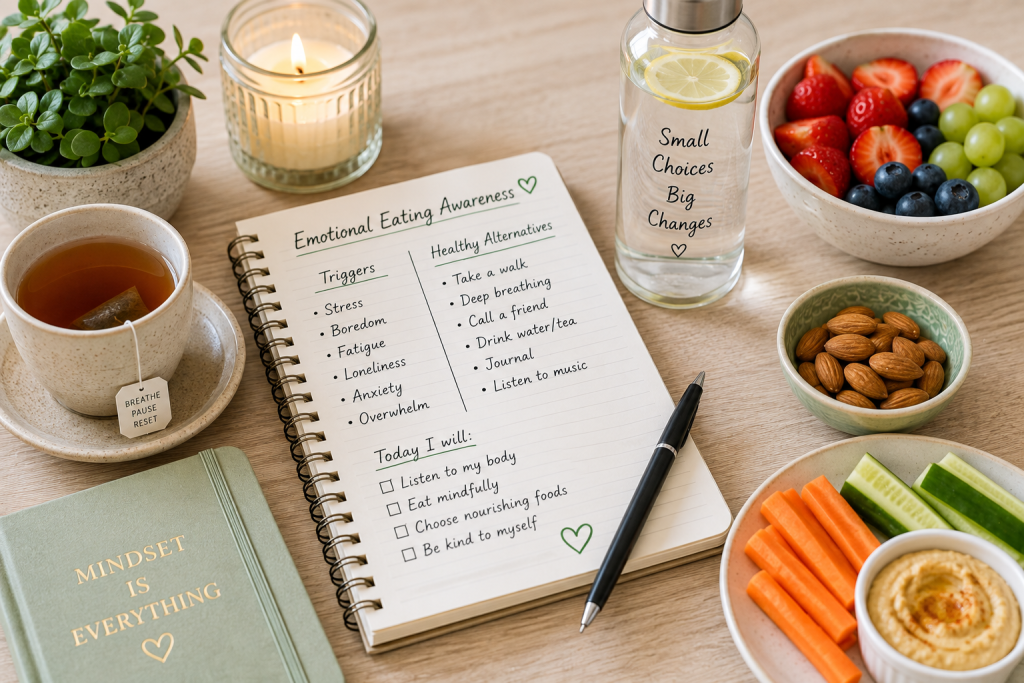
You don’t need perfection. Small daily changes can make a big difference over time.
Track meals, emotions, and habits to recognize patterns and make mindful choices over time.
Pause Before Eating
Before grabbing a snack, take one minute to ask:
- Am I physically hungry?
- What emotion am I feeling?
- Will food actually solve this problem?
That short pause often creates enough awareness to make a different choice.
Build a Coping Toolbox
Food isn’t the only way to manage emotions.
Try alternatives such as:
- Going for a short walk
- Calling a friend
- Reading a book
- Deep breathing
- Listening to music
- Journaling
- Stretching
- Drinking herbal tea
Having several coping options makes emotional eating less automatic.
Don’t Skip Meals
Skipping meals often leads to intense hunger later in the day, making emotional eating much harder to resist.
Aim for balanced meals that include:
- Lean protein
- Fiber-rich vegetables
- Healthy fats
- Whole grains
Keep Healthy Snacks Available
Preparing nutritious snacks ahead of time makes healthy choices much easier when hunger strikes.
Examples include:
- Greek yogurt
- Fresh fruit
- Nuts
- Cottage cheese
- Hard-boiled eggs
- Vegetable sticks with hummus
Mindful Eating Techniques

Mindful eating helps you reconnect with your body’s natural hunger and fullness signals.
Try these simple habits:
- Eat without distractions.
- Slow down your eating.
- Chew thoroughly.
- Notice flavors and textures.
- Stop when comfortably satisfied rather than overly full.
These small changes can improve your relationship with food over time.
Staying hydrated throughout the day can help you distinguish thirst from hunger and support mindful eating.
Building Healthy Daily Habits
Breaking emotional eating isn’t about strict dieting—it’s about creating routines that support your well-being.
Helpful habits include:
- Prioritizing quality sleep
- Staying hydrated
- Exercising regularly
- Managing stress
- Planning meals in advance
- Keeping healthy foods visible
- Practicing self-compassion instead of guilt
Healthy habits built consistently are more sustainable than trying to rely on motivation alone.
Enjoy a calming cup of herbal tea when stress or emotional cravings appear instead of reaching for unhealthy snacks.
Frequently Asked Questions
Is emotional eating normal?
Yes. Almost everyone eats emotionally from time to time. The goal isn’t to eliminate it completely but to reduce how often it happens.
Can emotional eating prevent weight loss?
It can, especially if it happens frequently. Becoming aware of your triggers can help you make more intentional choices.
Should I avoid my favorite comfort foods?
Not necessarily. Completely restricting foods can sometimes increase cravings. A balanced approach is often more sustainable.
How long does it take to break emotional eating habits?
Everyone is different. Building new habits takes time, consistency, and patience, but small daily improvements add up.
Can mindful eating really help?
Yes. Many people find that eating more slowly and paying attention to hunger cues helps reduce overeating and improves satisfaction with meals.
Final Thoughts
Emotional eating is something many people experience, but it doesn’t have to control your relationship with food. By learning to recognize emotional triggers, practicing mindful eating, and building healthier coping strategies, you can create lasting habits that support both your physical and emotional health.
Progress doesn’t come from being perfect—it comes from making one better choice at a time. Over time, those small choices can lead to meaningful, sustainable changes in your overall well-being.
Ready to Kickstart Your Weight Loss Journey?
If you’re looking for practical nutrition tips, healthy recipes, and sustainable weight loss strategies, download my free 14-Day Weight Loss Kickstart Guide today.
Start building healthier habits—one meal and one choice at a time.