
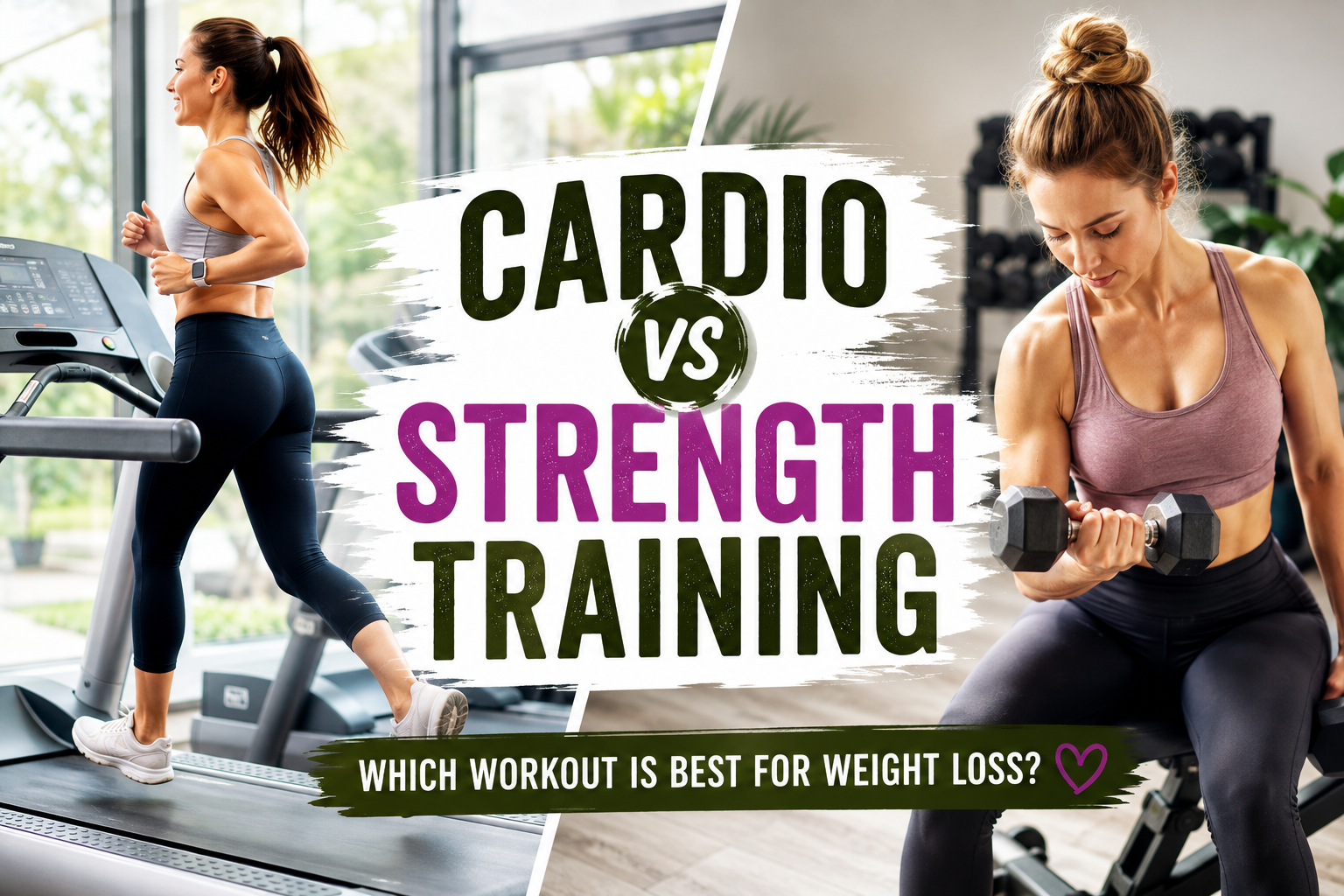
Cardio vs Strength Training: Which Workout Is Best for Weight Loss?
If you’re trying to lose weight or improve your fitness, you’ve probably wondered whether cardio or strength training is the better choice. The truth is that both types of exercise offer unique benefits, and understanding how they work can help you create a workout routine that delivers the best results.
Cardio burns calories during your workout, while strength training helps build lean muscle, which supports your metabolism over time. Instead of choosing one over the other, many fitness experts recommend combining both for long-term health and sustainable weight loss.
In this guide, you’ll learn the differences between cardio and strength training, their individual benefits, and how to use both to reach your fitness goals.
- High Protein Meal Prep for Weight Loss
- Healthy High Protein Wraps for Weight Loss
- Sustainable Weight Loss That Actually Lasts
- Walking for Weight Loss: A Simple Way to Burn Fat
- Healthy High Protein Pizza Dough Recipe
- High Protein Balls – Easy No Bake Snack Recipe
- Healthy Soups – Easy Recipes for Every Season
What Is Cardio Training?
Cardio, short for cardiovascular exercise, is any activity that raises your heart rate and keeps it elevated for an extended period.
Popular cardio workouts include:
- Walking
- Running
- Cycling
- Swimming
- Rowing
- Jump rope
- Dancing
- Hiking
- Elliptical workouts
Cardio improves your heart and lung health while helping you burn calories during exercise.
- Track your daily activity, heart rate, calories burned, and workouts to stay motivated and monitor your progress.
What Is Strength Training?

Strength training focuses on working your muscles against resistance to build strength and maintain lean muscle mass.
Examples include:
- Dumbbell workouts
- Resistance band exercises
- Bodyweight exercises
- Kettlebell workouts
- Weight machines
- Barbell exercises
Strength training isn’t just for bodybuilders. It’s one of the most effective ways to improve overall health, especially as we get older.
- Adjustable dumbbells are perfect for home workouts and allow you to increase resistance as you get stronger.
Benefits of Cardio Workouts
Cardio provides many health benefits beyond weight loss.
Burns Calories
Cardio generally burns more calories during the workout itself, making it useful for creating a calorie deficit.
Improves Heart Health
Regular cardio strengthens your heart and improves circulation.
Increases Endurance
You’ll notice improved stamina during everyday activities and exercise.
Reduces Stress
Many people find walking, jogging, or cycling relaxing and mood-boosting.
Supports Overall Health
Regular cardiovascular exercise may help reduce the risk of heart disease, high blood pressure, and type 2 diabetes.
Benefits of Strength Training
Strength training offers benefits that continue long after your workout is finished.
Builds Lean Muscle
More muscle helps support your metabolism and overall body composition.
Supports Fat Loss
Strength training helps preserve muscle while losing body fat, leading to a leaner appearance.
Strengthens Bones
Resistance training supports bone density, which becomes increasingly important with age.
Improves Daily Function
Carrying groceries, climbing stairs, and everyday tasks become easier as your strength improves.
Boosts Confidence
Many people feel stronger, healthier, and more confident as they gain strength.
Cardio vs Strength Training for Weight Loss
This is where many people become confused.
Cardio
Cardio burns more calories during the workout itself.
For example:
- Walking: Moderate calorie burn
- Running: Higher calorie burn
- Cycling: Moderate to high calorie burn
Strength Training
Strength training may burn fewer calories during the workout, but it helps preserve and build muscle, which supports your metabolism over time.
It also improves body composition by helping you lose fat while maintaining lean muscle.
Which Is Better?
If your goal is long-term fat loss rather than simply losing weight on the scale, strength training has significant advantages.
However, cardio still plays an important role by increasing daily calorie expenditure and improving cardiovascular fitness.
The most effective approach is combining both.
Should You Combine Both?
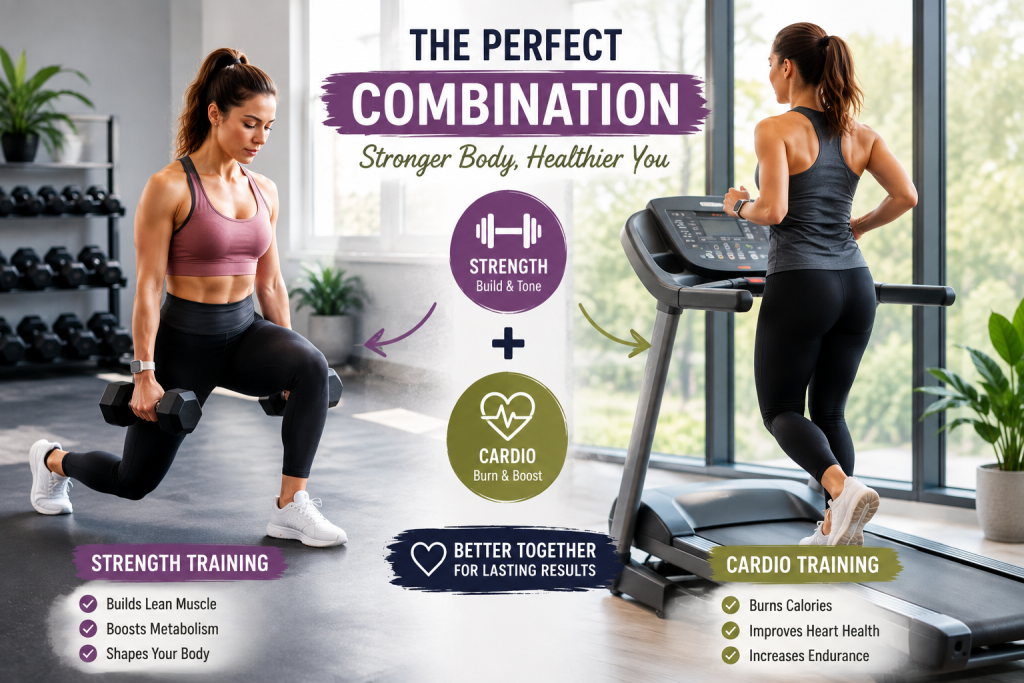
Absolutely.
A balanced workout routine might include:
- 2–4 strength training sessions per week
- 2–5 cardio sessions per week
- Daily walking whenever possible
- At least one recovery day each week
This combination helps you:
- Burn calories
- Build lean muscle
- Improve heart health
- Increase endurance
- Support long-term weight management
For many beginners, even 20–30 minutes of movement most days can make a meaningful difference.
- Resistance bands add variety to strength workouts and are ideal for beginners and home gyms.
Common Mistakes to Avoid
Doing Only Cardio
Many people spend hours on the treadmill while completely ignoring strength training.
Avoiding Weights
Using weights will not automatically make you bulky. Building significant muscle takes consistent training and nutrition over a long period.
Skipping Recovery
Rest days are essential for muscle recovery and injury prevention.
Expecting Instant Results
Fitness is a long-term commitment. Consistency matters far more than perfection.
Ignoring Nutrition
Exercise alone cannot compensate for an unhealthy diet. Combining regular workouts with balanced nutrition delivers the best results.
Frequently Asked Questions
Is cardio or strength training better for beginners?
Both are excellent. Beginners often benefit from combining simple strength exercises with walking or other low-impact cardio.
Can I lose weight without cardio?
Yes. A calorie deficit combined with strength training can lead to successful weight loss, although cardio can help increase calorie expenditure.
How often should I lift weights?
Two to four strength training sessions per week are a great starting point for most adults.
Should I do cardio before or after strength training?
If building strength is your main goal, perform strength training first. If improving endurance is your priority, cardio can come first. Many people also choose to separate them into different sessions.
Is walking considered cardio?
Yes. Walking is one of the safest and most sustainable forms of cardiovascular exercise and is suitable for nearly every fitness level.
Final Thoughts
When comparing cardio vs strength training, there isn’t a single winner. Both forms of exercise offer powerful health benefits and work best when combined.
Cardio helps improve heart health, endurance, and calorie burn, while strength training builds lean muscle, supports metabolism, and improves body composition.
Instead of choosing one over the other, aim for a balanced routine that includes both. Combined with healthy eating and consistency, this approach can help you lose fat, build strength, and improve your overall health for years to come.
- A comfortable, non-slip yoga mat provides the perfect surface for strength training, stretching, and recovery exercises.
Ready to Kickstart Your Weight Loss Journey?
If you’re ready to build healthier habits with easy nutrition tips, simple workouts, and practical guidance, download my free 14-Day Weight Loss Kickstart Guide today.
Small, consistent steps can lead to lasting results—start your journey today.